Showing posts with label Travel Tips. Show all posts

Sunday, 13 October 2024

4 Reasons Why I Prefer Hostels to Airbnb

As a solo traveler, I prefer staying at hostels instead of the ever popular Airbnb. 

I have friends who always opt for Airbnbs whenever they travel, even when they're travelling solo. They like the interiors of the accommodation (Instagrammable!), they like the privacy and facilities that Airbnb offers, etc. Well, to each his/her own.

Here, I list down four reasons why hostels are my favorite type of accommodation whenever I travel.

Reason #1 - Hostels are economical

Travelling can be expensive, especially when travelling to a country which has a stronger currency compared to the currency in which we're earning.

Coming from Malaysia and travelling to countries in Scandinavia or Western Europe may burn deep holes in my pocket. One way to manage travelling expenses is to opt for economical options such as hostels.

If I'm travelling with a companion or two, it would make sense to stay at an Airbnb because the cost is shared. However, that option would be costly for a solo traveler as I'll have to solely bear the cost. Therefore, hostels offer the most economical option for solo travelers.

Having said that, in some cheaper countries, the rate of a private room with ensuite bathroom may be equivalent to that of a dorm bed in a more expensive country. If I'm travelling to these cheaper countries, I'll usually select the private room.

My first experience staying at an Airbnb was in Japan (June 2017). We selected that option because my travel partner wanted to experience it. Our Airbnb in Tokyo was located in this building. Pardon the garbage bags in the photo.


Reason #2 - Hostels are the place to meet fellow travelers

In many of my trips, I've met other wonderful travelers at the hostels where I stayed. We exchange travel stories and travel tips. And if we connect, we go out for meals and drinks, and even do day-trips together. 

During my trip to Central Asia in March, I visited five cities in four different countries. When I was in Dushanbe, Tajikistan there were only three other travelers at Bruce Hostel where I stayed. So the four of us went out for meals and drinks and had deep conversations about life. We can never be alone at hostels.

On the other end of the personality pole, I understand that staying at hostels may not be everyone's preference especially for introverts, private people, or people who have a general dislike for other homo sapiens. For people with such personalities, staying at Airbnb or hotels makes them feel comfortable.

I stayed at Soul Kitchen hostel when I was in Saint Petersburg, Russia (Sept 2018). The large common area/living room was a great place to meet other travelers. I snapped this photo at around 5:00pm when all the travelers were out.


Reason #3 - Hostels are a good source of information 

Whenever I arrive at a particular city or town for the first time, I usually look for information such as how to get to a particular location, are there local tours, the best eateries serving local delicacies, etc. Hostels usually have such information readily available. More established hostels even organize in-house activities for their guests such as walking tours, pub crawls, and cooking classes.
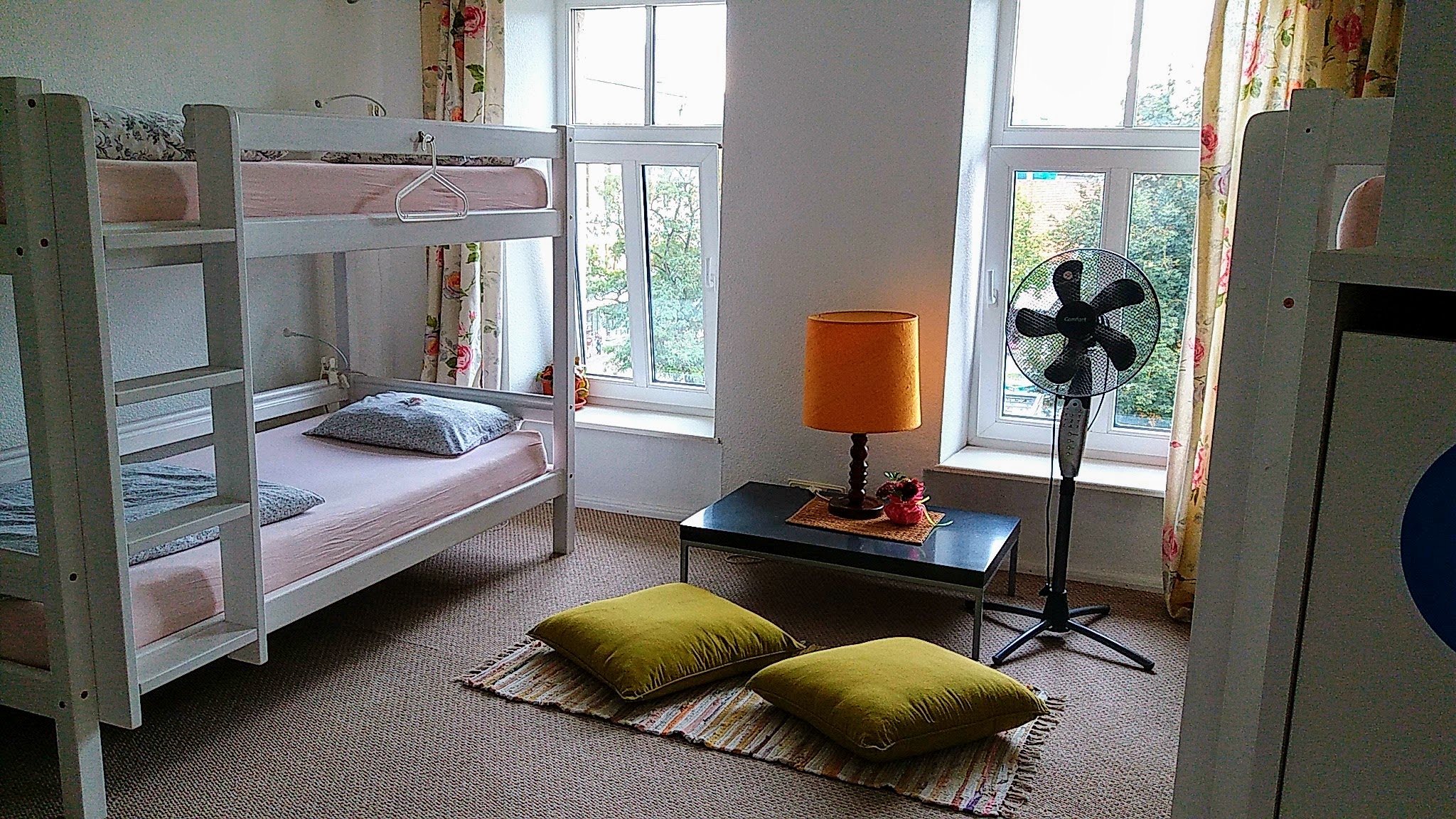
I stayed at Tree House Hostel in Riga, Latvia (Sept 2018). I love the white color interiors which makes it look immaculate. Posting the pic here, just because.


Reason #4 - Safety / Help is at hand

Whenever I travel solo, safety would be a priority. 

If I stay at hostels, I can always seek help from the staff or from other travelers staying at the hostel. For instance, when I was in Cairo in February 2008, local men tried to chat me up, and some even followed me. I remember one guy asked me to help him promote his tour business. Another became aggressive when I politely turned down his offer to see his souvenir shop. Whenever it gets overwhelming and I feel that my safety is being compromised, I would quickly return to my hostel. In all of those instances, the men stopped following me.

If I stay at an Airbnb, I would be alone in the unit. If anything untoward happens such as a health situation, or an accident, there won't be anyone around where I can seek immediate help. 

In spite of the peace of mind that staying in hostels offers, there are certain hostels without a reception or staff. For example, when I was in Malta in December 2023, both the hostels that I stayed in did not have staff. Instead, instructions to check-in, the code to access the main door, how to find the dorm and bed, location of bathroom, etc. were communicated via WhatsApp prior to my check-in date. If I needed anything, I would have to either text the person who sent me those instructions, or ask the other travelers at the hostel. I find this way of operating a hostel impersonal and there's no immediate place to seek help if I needed it. 

Certain hostels provide travel warnings to their guests, like this signage at Wombat's The City Hostel in Budapest, Hungary (Oct 2019).


Now that I've shared four reasons why I prefer hostels to Airbnb, let me know in the comments section which is your favorite type of accommodation. 


Sunday, 5 November 2017

3 Tips to Ensure You Have Sufficient Cash in Japan


A friend is going to Japan this month for about 9 days. She wants to see Japan's golden colours of autumn. 

The other day I asked her how much Japanese Yen (JPY) is she planning to bring. She said she had already bought JPY3,000. I commented that JPY3,000 is definitely not going to last her 9 days and that she needs to buy more JPY.

Just to give you an idea, I spent approximately JPY96,000 when I was in Japan for 9 days in June. JPY96,000 is for ground transport (including the Shinkansen bullet train which was the most expensive train ride in my life), meals, entrance fees, souvenirs, etc. Flight and accommodation were already paid in advance before the trip.

Japan is not like most other countries where you can bring universally accepted currencies like the US Dollar and EURO to buy the local currency at the money changer or bureau de change.

Reason is because there are NO money changers in Japan. My Japanese colleagues had confirmed this before I went to Japan.

There are no money changers in Japan, not even in tourist spots like Dotonbori in Osaka.


In Japan the only place to get JPY is at the bank. Since most of the locals do not speak English, it may be difficult to express what you want. Even the ATMs are all in Japanese.


In Japan the only place to get JPY is at the bank.
Pic: A row of ATMs at Sumitomo Mitsui Banking Corporation's (SMBC) headquarters in Osaka. 


Here are three tips to ensure you have sufficient cash when travelling in Japan:

Tip 1: Buy before travelling
Whenever possible, purchase your transport tickets, theme park tickets, accommodation, etc. in advance before arriving in Japan. By doing this, you won't find yourself caught in a situation where all your cash has been used up unexpectedly.

Purchasing tickets in advance means you don't have to think too much about what ticket to buy, where to buy it, and the how much does it cost when you arrive in Japan. This would give yourself peace of mind and more free time for sightseeing and exploring.

Before I went to Japan, I had bought the following before leaving home: 2-Day Amazing Osaka Pass, 72-Hour Tokyo Subway Ticket and Airbnb accommodation in Osaka, Kyoto and Tokyo.

In case you're wondering how I purchased the tickets beforehand, you may contact H.I.S. Malaysia. They sell a host of tickets in Japan like the JR Pass, theme park tickets (Tokyo Disneyland, Universal Studios Japan, etc.), flight tickets, etc.

Tip 2: Draw out a budget
Draw out a budget, add another 20% for contingency and buy enough JPY from your home country.

Tip 3: Use credit card
My favourite option is to use credit card, especially for big ticket items. This will leave you enough cash for the smaller stuff like meals and souvenirs.

Some of you may argue that credit card exchange rates are higher compared to paying in cash. Despite this I still prefer using credit card. Imagine buying too much JPY just because you're not sure how much to bring. Compared to losing from the credit card exchange rate, you'll lose much more if you convert the balance JPY back to your home currency.

However if you become a Japanophile and decide to make many trips to Japan, then perhaps it's a good idea to buy more JPY, especially if the exchange rate is attractive.

Happy travels!

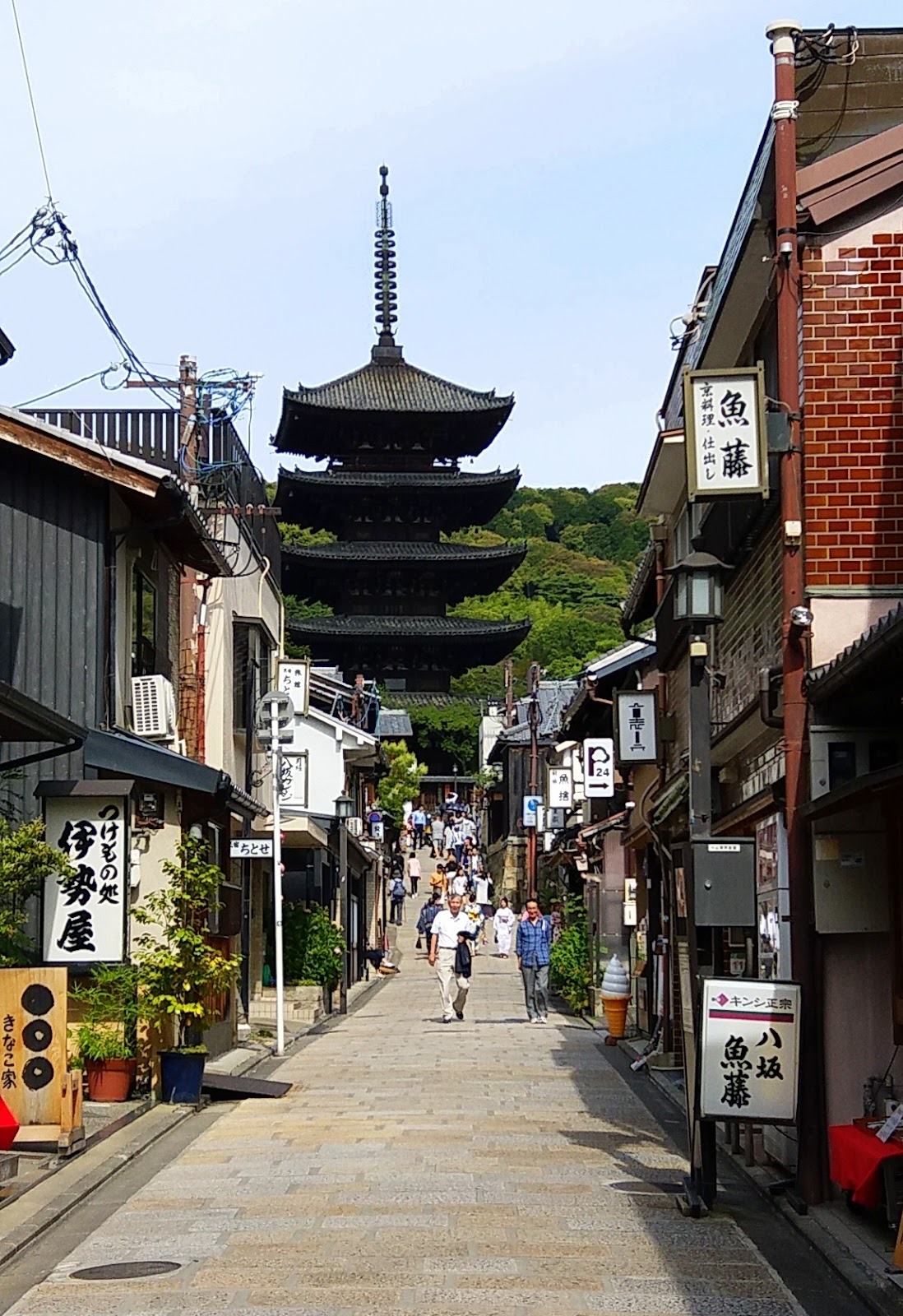
Just a random shot in Kyoto.


Tuesday, 16 May 2017

How to Shower in Ice Cold Water

When I was in Dhunche, a small town in the Langtang region of Nepal, I stayed at Hotel Himalayan Legend ...


... which didn't have hot shower. There were solar panels on the roof but the guesthouse owner claims they were not working. 

I know there're trekkers who don't bathe throughout the duration of their trek which can last for days. But I can't do that. After coming in from a long trek, sweaty, dirty and all, I always appreciate a hot shower. It is refreshing and I can sleep well ready for the next day's trek.

Since Hotel Himalayan Legend didn't have hot shower, I had to shower in ice cold water. Here's how to do it: 

1) Warm up by doing some vigorous exercise like jumping around and running on the spot.
2) Open the shower and let the ice water flow.
3) Use your hands to wet your arms followed by your body and legs. Your body will eventually get used to the ice water if you wet your body in stages. Last of all, put your head under the shower to wet your hair.  
4) Quickly shampoo, lather soap on your body and rinse off.
5) Step out of the shower and continue doing small exercises to warm up your body. 
6) Towel down and put clothes on.

Those who can stand the ice water may even step under the shower at one go. I prefer to do it step by step.

Good luck!

Monday, 15 May 2017

Putting on and Removing Contact Lenses in Basic Conditions

During my 3 trips to Nepal, I've mastered the art of putting on and removing contact lenses in basic conditions, i.e. without water and no wall mirror.

Most of the guesthouses along the treks don't have ensuite bathrooms in the bedrooms. The bathrooms are usually located outside the rooms and extremely basic, i.e. no wash basin, no mirror, no shower (some of the guesthouses boiled water for us to bathe for a fee), run down, etc.

Therefore putting on and removing contact lenses in these conditions could be pretty challenging especially when cleanliness must be observed at all times when it comes to contact lenses and our eyes.

Here are the 4 items you'll need to put on and remove contact lenses in basic conditions:

1) Antibacterial hand sanitiser
2) Compact mirror
3) Contact lenses (goes without saying)
4) Disinfectant (goes without saying)
5) Headlamp or torchlight (optional)


Method:

a) Prop your compact mirror up firmly against anything that's convenient for you, e.g. window, bagpack, etc.
b) Open ready your contact lens case and caps on the disinfectant and antibacterial hand sanitiser.
c) Squirt a little antibacterial hand sanitiser on the palm of your hands and rub it all over your hands especially your fingers.
d) Pick up one lens from the contact lens case and rinse it with disinfectant.
e) Using the compact mirror to guide you, place the lens into your eye. Repeat for the other lens.
f) Guesthouses in the mountains of Nepal operate on generators which kick in during specific times only. So if you need to put on or remove your lenses in the dark, use a headlamp or torchlight (clinch with your teeth or get someone to hold for you).

I promise if you follow this method properly you won't develop any eye infection.

Good luck!


Friday, 16 March 2012

AirAsia Begins Flights to Kalibo (Gateway to Boracay) in the Philippines, But ...

AirAsia recently announced flights to Kalibo (gateway to Boracay island) and Davao in the Philippines. However, there's a catch ... the flights are from Clark Airport in Manila, NOT from its hub in LCCT, Kuala Lumpur (KL).

So if you're in KL and planning a beach holiday to Boracay, you'd need to fly KL - Manila - Kalibo. From Kalibo you'd need to travel to the jetty and then take the boat to Boracay island.

And here's another sucky thing to consider: currently there's only one flight daily from KL to Manila that leaves early in the morning, and two flights daily from Manila to Kalibo. If you're planning to fly into Manila and then to Kalibo on the same day, the best option is to take the early morning flight into Manila and the afternoon connecting flight to Kalibo. However, if there are no boats from the jetty to Boracay island in the evening, then you would have to spend a night (more expenses) in Kalibo before taking the boat to Boracay the next morning.

To me, this is all just too much hassle, especially just to enjoy an island when Malaysia is already blessed with numerous beaches and islands that can rival that of Boracay, or even better than Boracay.

I think when it comes to island holidays, I'd stick to good old Malaysia or even the islands in Thailand where the journey to tropical paradise is only a flight away.

Groupon has also jumped on the bandwagon and started offering snorkelling packages in Boracay. I think there were hotel packages too.


But I don't think the people who bought these packages know what a hassle it is to get to Boracay from KL by flying AirAsia. Or they may have other means to get to Boracay.

To conclude this blog post, here's some souvenirs brought back by a colleague who was in the Philippines recently for a working trip:


Sunday, 12 June 2011

Travellers Are Ambassadors

Do you realise that whenever you travel, you're being an unofficial ambassador for your country? The way you behave will give an impression on what sort of people come from your country.

Take a look at this picture:

Photo taken at Bath Backpacker's Hostel in England.


Eventhough the poster above was created in jest, it just goes to show that people are indeed observing the way people from certain countries behave.

It is also important to be hospitable towards tourists in your own country. These tourists may have approached you for direction or travel tips, and the way you treat them will give an impression on what sort of people your country has.

I myself have given directions to many tourists who have approached me for help. And if I happen to be going the same way, I would bring them personally to their destination so that they won't get lost. I hope my efforts have created a good impression that Malaysians are friendly and helpful :-)

As a traveller who has travelled reasonably wide and met people from different nationalities along the way, I have met people from various countries who have shaped my impression (positive and negative) of them. For example, I think Syrians are extremely friendly and hospitable; and the Vietnamese are so rude and dishonest that I'll never return to Vietnam again unless it's a matter of life and death.

So you see, it's important to behave properly whenever you travel and to treat travellers well because you are an impression of your own country.

Saturday, 13 March 2010

4 Important Tips to Stay Healthy While Travelling

Falling sick during your travels can be a huge bummer. All the things you wanna do and experience ain't gonna happen if you're lying in bed with a fever or flu.

To avoid all these disappointments, it is extremely important to stay healthy and here are 4 ways to do it.

1) Drink lots of water.


Water is extremely important to remain hydrated, especially when you're in a tropical country where it's hot and humid.

Bring along a bottle of water wherever you go. It is not only the best way to keep yourself hydrated, but it's cost savings during meals. Most eateries sell drinks at exhorbitant prices. By bringing your own water, you not only keep yourself hydrated, you get to save money too!


2) Eat lots of fruits and vege.


Our mothers have been drumming this piece of advice into our heads since we were little. So why not use this piece of advice during travel as well? After all, mothers know best :-)


3) Avoid foods that you can't identify.

No matter how adventurous you wanna be when it comes to eating, avoid foods you can't identify - at all cost.

When you're in an unfamiliar country, you never know what the locals eat. Like for example, do you know that the Vietnamese eat dogs? The thought of putting the flesh of those little cute, faithful creatures into my mouth would give me a stomach upset for days on end!

Eat where the locals eat is good advice for travellers who are on a budget. But sometimes what the locals can stomach might not be ok for you. Take a look at these stalls:

Would you eat from these stalls?

Always pick a stall that you think is clean and will not cause you to fall sick.


4) Go to toilet everyday.

What goes in must come out, and you've got to ensure it happens everyday. Otherwise your body will be filled with toxic and you'll fall sick eventually.

To be able to go to the toilet everyday, drink lots of water and don't forget your fruits and vege too.

Some people can't do it regularly when they are travelling because of the change in routine and food intake, or they are uncomfortable sitting on a "throne" that is not theirs. Someone I know can do without going to the toilet for up to one week whenever she travels! And that's nasty!

Thursday, 21 January 2010

Common Bahasa Malaysia Words Not Similiar to Bahasa Indonesia

Few words to take note of when communicating with Indonesians:

Bahasa Malaysia = Bahasa Indonesia
Bilik (room) = Kamar
Tandas (washroom) = Kamar kecil
Boleh (can) = Bisa
Cik (miss, younger) = Embok
Puan (madam, older) = Ibu
Cili (chili) = Cabai
Encik (mister, younger) = Mas
Tuan (sir, older) = Pak
Pejabat (office) = Kabupaten Cantor
Tuala (towel) = Handuk

Additional words learnt after my trip to Mt Bromo & Borobudur from 16 - 21 February 2010
Percuma (free-of-charge) = Gratis
Farmasi (pharmacy) = Apotek
Kereta (car) = Mobil
Motorsikal (motorcycle) = Ojek
Ais (ice) = Es
Sejuk (cold) = Dingin
Segar (fresh) = Sejuk
Bandar (city) = Kota
Lelaki (man) = Pria
Buah tangan (souvenir) = Ole-ole
Hotel (hotel) = Losmen

Ok I'm off to Bali.

Will update this blog when I get back. Cheers!

Thursday, 31 December 2009

4 Items You Must Have in a Hostel

I cannot emphasise enough on the importance of having these 4 items when staying in a backpackers hostel.

Item 1: Slippers or Flip-Flops
Always use a pair of slippers whenever you bathe in the common shower or when going to the loo. In these places which are used by every Tom, Dick and Harry staying in the hostel, you'll never know what's on the floor. So a pair of slippers would provide adequate protection for your feet.

If you've invested in a pair of good quality slippers, you could also wear them while gallivanting about.


Item 2: Plastic bags
Eventhough we're encouraged to reduce the use of plastic for the sake of the environment, I carry plastic bags of various sizes whenever I travel. I use these bags to keep my things dry whenever it rains, for storing dirty clothes, for sending clothes to the laundry and even to wrap my shower gel and shampoo in case of spillage.

But the most important use of a plastic bag is in the shower. Most common showers in hostels do not have hooks to hang clothes and toiletries. Even if they have hooks, it may not be enough.

With a plastic bag, I just dump in my towel, new change of clothes, toiletries, etc. and hang the bag on whichever hook, shower handle, door knob, etc. that I can find. Easy isn't it?


Item 3: Ear plugs
When you sleep in a dorm with one hundred and one other fellas who fart, snore and creak the bed whenever they turn or whenever they get up to go to the loo, ear plugs would come in handy.

Some inconsiderate dorm mates may even speak at the top of their voices and ear plugs are a good way to shut these fellas out from your head.


Item 4: Eye pads
When some insensitive idiot comes back in the middle of the night and switches on the dorm light because he can't find his way to the bed, you'll be glad you have your sleeping eye mask on.

To save money, you can get sleeping eye masks free of charge on your flight. But don't expect it on budget airlines.


Tuesday, 6 October 2009

5 Tips to Travel Economically in London

(Updated December 2017)

Many people think that a trip to London is almost impossible because of the mighty Great Britain Pound (GBP) that has reduced all other currencies to pittance. But you can stretch your money and enjoy London at the same time, if you know how. Here are 5 tips to do it:

1) Visit the Free Attractions
There are many paying attractions in London. However, the best ones are free - British Museum, National Gallery, Tate Modern, Natural History Museum, Westminister Cathedral, Victoria & Albert Museum, etc.

Unless you must visit a certain paying attraction, visiting all the free ones is enough for a memorable trip to London.


You get to see naked statues for free at the British Museum!

Don’t worry about missing out if you don’t visit a certain attraction because eventually everything will begin to look the same. For example, visit Westminister Cathedral which is free instead of St Paul's Cathedral (GBP16.00) and Westminister Abbey (GBP20.00) because when you visit one church, you’ve seen 'em all.

2) Book Online
Attractions like Madame Tussaud, St Paul's Cathedral and Tower of London offer discounts if you book your ticket online. The discounts are not much but it’s still savings which could be used for food and transport. So remember to check the website of the attraction you wish to visit. You could save a couple of quid.

3) Bus Instead of Train
Using an Oyster card, a bus ride would cost GBP1.50 while a tube ride would cost about GBP2.40 (depending on the zone). There are also Travelcards and Day Passes. Read all options available and see which one suits your travel itinerary best.


Bus ride in London

But the downside about taking the bus is that you must know which bus to take and where to get off.

With the tube, you just get off at the specific station mentioned in the guides and look for the attraction you wish to visit. But the tube system in London can be confusing and overwhelming with its numerous lines running in different directions, and not to mention the human traffic at peak hours.

Remember to use the bus for long distance travel too because it's cheaper compared to taking the train.

And here's another tip. easyBus offers one of the most economical transfers from London to airports like Gatwick, Luton and Stanstead. 

4) Vespers - Your Free Entry into Paying Cathedrals
Vespers is the evening prayer service held in churches and is open to the public.

In St Paul's Cathedral and Wesminister Abbey where there are entrance fees, vespers are held after the last tourist has been ushered out at closing time. Attend the vespers at these places if you want to save your hard earned money. You not only get to hear the angelic voices of the choir, but you also get to step inside these awe inspiring houses of worship - for free.


St Paul's Cathedral

However, don’t think of roaming around after the vespers because the popular tourist spots within these places would have been cordoned off. For example, you would not be able to climb to the Whispering Gallery in St Paul’s Cathedral after closing time.

5) Survive on Sandwiches
One proper meal in London would cost an average GBP10.00 per person. In my country Malaysia, I could feed myself for half a month with that kind of money.


This egg & mayo sandwich costs 1.35 quid which made quite a substantial meal


The best way to reduce food expenses is to prepare your own meals. But if you do not have the time or cooking facilities, then I would recommend surviving on sandwiches. Shops like Pret-A-Manger and Marks & Spencers Food sells cheap sandwiches and these shops are available on almost every street corner.

If you’re horizontally challenged, think of surviving on sandwiches as a new crash diet; and if you're the type who likes to gorge at each meal, think of all the glorious food waiting for you when you return to your homeland.

Enjoy London!

Tuesday, 17 March 2009

Wrap Your Backpack

When I bought my backpack in December last year, the guy who sold it to me explained the importance of wrapping my backpack with cling wrap before checking it in at the airport.

Reason would be to prevent tear and damage since a backpack is not made of hardy material like a suitcase.

But the most important reason is to prevent bad people from slipping unwanted stuff into your backpack like drugs. There are many syndicates these days where syndicate members slip illegal stuff into your bag when you're not looking, with the hope that you'll be their 'personal courier'.

But if you do get caught, then the you're in deep shit. Excuses like "I don't know where that came from" will fall on deaf ears as the customs and police officers are used to hearing these kind of excuses daily.

So when I used my backpack for the first time during my trip to Laos, I made sure it was wrapped in cling wrap before I checked it in. So from this:


my backpack looked like this after wrapping:


Looks like a little ball.

Cling wrap services costs only RM8.00 per luggage at the Low Cost Carrier Terminal (LCCT). But not all airports have this service. So if you're travelling and want to clingwrap your luggage, you might want to consider having lots of spare cling wrap film at hand to do it yourself before coming to the airport. Alternately you could also buy cling wrap from most shops, but it might dent your travel budget, especially if you're on a tight one.

Saturday, 11 October 2008

Tips to Kick-Off Solo Travel


I received an email from Audrey Umbol of Kota Kinabalu, Sabah who wants to travel out of Malaysia, but is finding it difficult to look for a travel partner. So she wants to start travelling solo and asks if I could share some tips on how to kick it off. This is my reply to her:

Dear Audrey,

Thank you for dropping by my blog :-) I totally understand your urge to travel, yet you find it difficult to look for a travel partner.

My friends too were most of the time – couldn’t apply for leave, not interested, no money, didn’t agree with the destination, etc. Soon I decided that the best is to travel solo cause I didn’t want the lack of a travel partner impede my travel dreams. I want to travel and see the world!

And you not only have to look for a travel partner, you'll have to look for the right travel partner. That means someone who shares the same interests as you, preferably of the same age, etc. But I shall leave that for another blog entry.
So Audrey, here are the some tips to kick-start your solo travels:

a) Make a short weekend trip alone to somewhere within the country or nearby your house, just to see how you like it.

Travelling alone is a lot different from travelling with a partner. You are responsible for your own safety, your luggage, where you want to go, what you want to do, etc.

If you find that you can adapt to solo travel like a duck to water, start venturing to nearby countries. Very soon you’ll be travelling the world!

b) Make sure you read up a lot about the place you want to visit because like I said, you're solely responsible for your own safety. Remember to read up about safety precautions too when walking on the road, staying in hostels, etc. This is especially important being a lady.

c) If you find that travelling solo is not your cup of tea, then try joining a tour group. You can make friends there and get to see places as well.

Just put your mind and guts to it and you'll do fine. I hope your travel dreams will come true :-) Good luck!

Regards, Julie Lim

Please leave a comment if you have more tips to share with Audrey. She will be reading this entry closely :-)


Related Posts Plugin for WordPress, Blogger...